
Skor Thnot The Golden Soul of Cambodian Sweet Culture
Discover Cambodia’s treasured palm sugar, a naturally rich sweetener with deep caramel flavour, cultural importance and generations of traditional craftsmanship behind every jar.
More Than Sugar: An Ancestral Heritage
In Cambodia, sweetness is more than a taste. It is part of the country’s cultural identity. At the heart of this heritage is Skor Thnot, or Cambodian palm sugar. Unlike the neutral sweetness of refined white sugar, authentic Khmer palm sugar offers a deep and complex flavour reminiscent of caramel, butterscotch and lightly toasted molasses.
 The sugar palm tree is an enduring symbol of rural Cambodia
A Gift From Cambodia’s Sugar Palm
The sugar palm tree, known in Khmer as thnot, is one of Cambodia’s most recognizable national symbols. For centuries, rural communities have valued nearly every part of this remarkable tree.
Its strong trunk can be used as timber, its leaves can be woven into useful materials, its fruit can be enjoyed as food, and the natural nectar from its blossoms can be transformed into Cambodia’s celebrated palm sugar.
Rows of tall palm trees rising above rice fields are closely connected with Cambodia’s countryside, agricultural traditions and national identity.
The High-Wire Art of the Harvest
Producing authentic palm sugar requires skill, patience and demanding physical work. Farmers carefully climb tall sugar palm trees to reach the flowering stalks and collect their naturally sweet sap.
The freshly collected nectar is then heated and slowly reduced. As moisture evaporates, the liquid becomes thicker, darker and increasingly aromatic. Careful stirring helps create the smooth golden paste or fine powder used in Cambodian kitchens.
Palm Sugar Paste and Palm Sugar Powder
Cambodian palm sugar is available in different forms for traditional recipes, beverages, baking and everyday cooking.
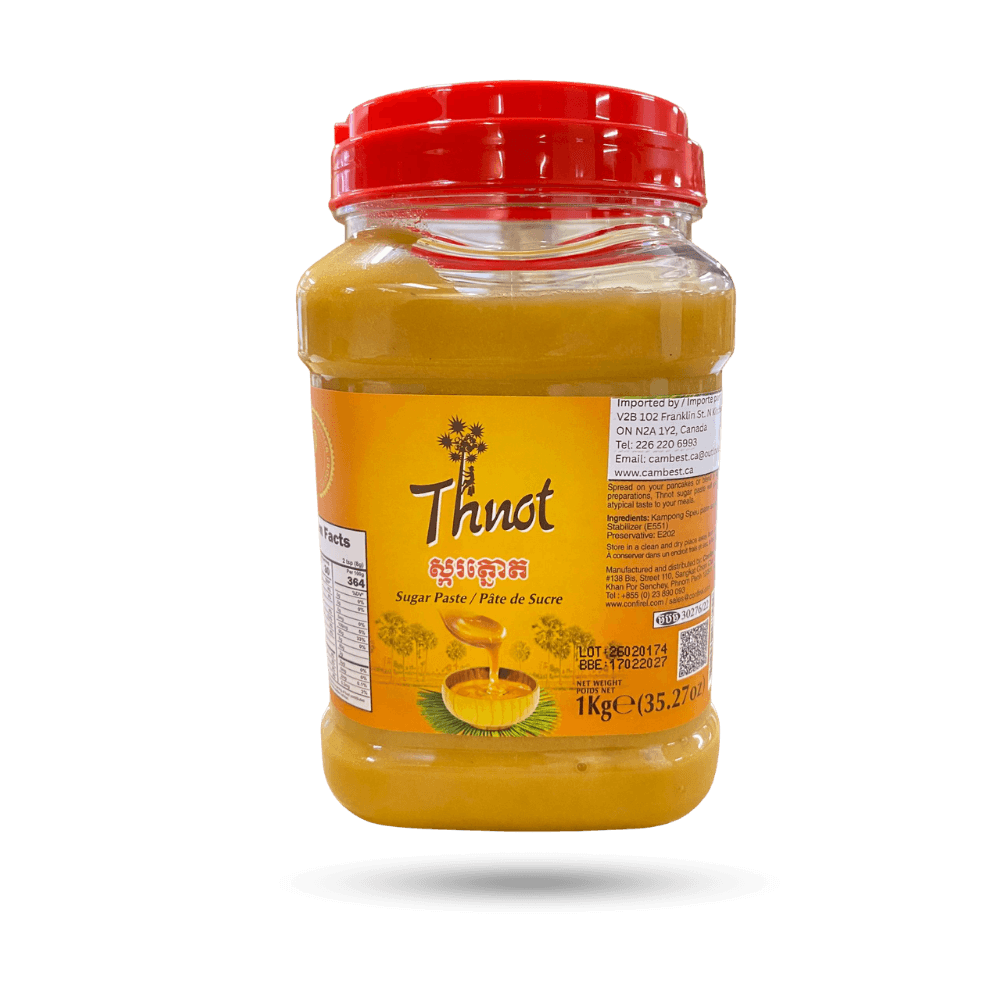
Palm Sugar Paste
Rich and Smooth Palm Sugar Paste
Palm sugar paste retains a soft texture and deep caramel character. It dissolves beautifully into sauces, marinades, curries, hot drinks and desserts.
- Deep caramel and butterscotch flavour
- Easy to blend into sauces and beverages
- Excellent for traditional Cambodian cooking
- Ideal for glazes, curries and desserts
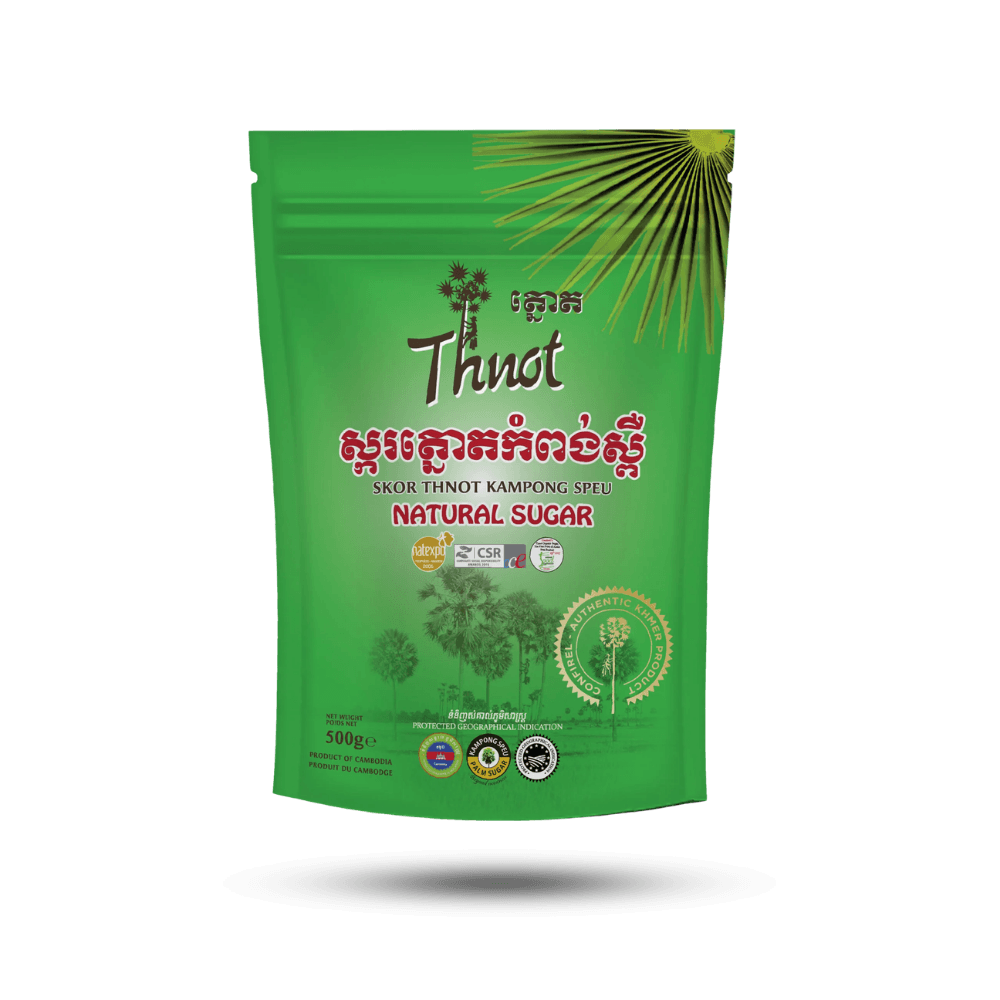 Palm Sugar Powder
Convenient Palm Sugar Powder
Palm sugar powder provides the same distinctive flavour in a convenient format that is simple to measure, sprinkle and incorporate into recipes.
- Simple to measure for baking
- Convenient for coffee, tea and smoothies
- Easy pantry storage
- Useful for both home and commercial kitchens
Icons of Khmer Dessert Culture
Palm sugar is widely used in Cambodian sweets, where its rich flavour pairs beautifully with coconut, sticky rice, banana, mung bean and tropical fruits.
Nom Phlae Ai
Soft glutinous rice balls filled with palm sugar and finished with freshly grated coconut. As the centre melts, it creates a warm burst of rich sweetness.
Num Akoar Thnot
A steamed Cambodian cake known for its soft, airy texture and distinctive palm flavour. It may incorporate both palm sugar and ripe palm fruit.
Num Ansom
Traditional sticky rice cakes wrapped in banana leaves, commonly filled with banana or mung bean and gently sweetened with palm sugar.
Toddy Palm Dessert
Tender pieces of young palm fruit served in a fragrant mixture of coconut milk and palm sugar syrup for a refreshing Cambodian dessert.
How to Use Palm Sugar Every Day
Its warm flavour makes palm sugar useful in both sweet and savoury recipes.
A Less Refined Sweetener
Traditional palm sugar is generally less refined than standard white table sugar and retains its distinctive colour, aroma and caramel-like flavour.
Because its taste is more complex and concentrated, a smaller amount may sometimes provide enough sweetness and flavour for a recipe. It remains an added sugar, however, and is best enjoyed in moderation as part of a balanced diet.
Experience the Rich Taste of Authentic Skor Thnot
Explore Cambest Cambodian palm sugar and discover a naturally rich sweetener rooted in generations of Khmer craftsmanship.